2. Check the block visually for cracks, rust, corrosion. Check if the threads in the threaded holes are clogged.
3. Check the inner surfaces of the cylinders for wear and scratches.
4. Measure the diameter of each cylinder at the top (just below the protrusion), in the center and at the bottom, parallel to the crankshaft axis (see figure).
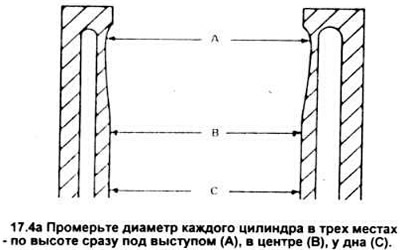
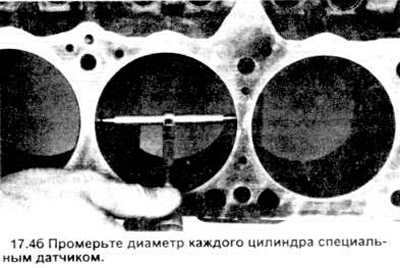
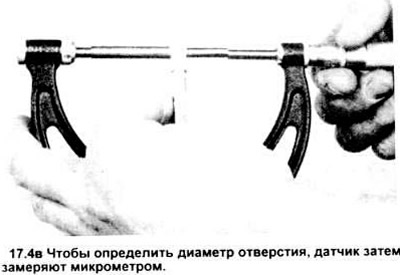
Then measure the diameter of each cylinder at the same three levels perpendicular to the crankshaft axis. Compare the results with the specification data. If the cylinder walls are heavily worn, scratched, have excessive deviations from roundness or have a taper higher than the permissible limit, perform additional boring and honing of the block bores. After processing, larger pistons and rings will be required.
5. If the condition of the cylinders is good, the dimensions are within tolerances and the required clearance between the piston and the cylinder is maintained, only honing is necessary.
The full article is on the online resource (fordbook.ru)