Vehicle Maintenance Ford Taurus 1 and 2

Jacking and towing
Jacking up Warning: A car jack should only be used to raise the car when changing tires or placing stands under the frame. Never work under the car or start the engine...
Jacking up Warning: A car jack should only be used to raise the car when changing tires or placing stands under the frame. Never work under the car or start the engine...

General specifications of the car
Recommended lubricants and other fluids Motor oil Type API spring-autumn SF, SF/CC or SF/CD, all-season Viscosity see attached table Capacity Four-cylinder engine 4.7 L...
Recommended lubricants and other fluids Motor oil Type API spring-autumn SF, SF/CC or SF/CD, all-season Viscosity see attached table Capacity Four-cylinder engine 4.7 L...

Introduction to Maintenance
See illustrations 1.2a, 1.2b, 1.2c, 1.2d, 1.2d. Warning: The electric fan in these models can be used at any time, even with the ignition off. When working in the fan...
See illustrations 1.2a, 1.2b, 1.2c, 1.2d, 1.2d. Warning: The electric fan in these models can be used at any time, even with the ignition off. When working in the fan...
Maintenance schedule
This schedule is based on the manufacturer's recommendations, with some intervals (such as lubrication and fluid changes) being reduced to improve engine and other...
This schedule is based on the manufacturer's recommendations, with some intervals (such as lubrication and fluid changes) being reduced to improve engine and other...

Checking fluid levels
Warning: The electric fan in these models can be used at any time, even with the ignition off. When working in the fan area, disconnect the fan motor or the negative...
Warning: The electric fan in these models can be used at any time, even with the ignition off. When working in the fan area, disconnect the fan motor or the negative...
Tires and tire pressure monitoring
State Probable cause Your actions Lateral wear 1. Underinflated tire (Both sides worn out). 2. Incorrect wheel alignment (One side worn out). 3. Sharp turns. 4. Hub...
State Probable cause Your actions Lateral wear 1. Underinflated tire (Both sides worn out). 2. Incorrect wheel alignment (One side worn out). 3. Sharp turns. 4. Hub...

Checking the power steering fluid level
See illustrations 5.2 and 5.5. Warning: In these models of cars, the electric fan can operate with the ignition off. When working in the fan area, turn off its motor or...
See illustrations 5.2 and 5.5. Warning: In these models of cars, the electric fan can operate with the ignition off. When working in the fan area, turn off its motor or...

Checking the fluid level in the automatic transmission
Warning: In these models of vehicles, the electric fan can operate with the ignition off. When working in the fan area, turn off its motor or disconnect the negative...
Warning: In these models of vehicles, the electric fan can operate with the ignition off. When working in the fan area, turn off its motor or disconnect the negative...

Changing engine oil and filter
Warning: In these models of vehicles, the electric fan can operate with the ignition off. When working in the fan area, turn off its motor or disconnect the negative...
Warning: In these models of vehicles, the electric fan can operate with the ignition off. When working in the fan area, turn off its motor or disconnect the negative...

Adjusting the clutch pedal
1. All vehicles covered in this manual are equipped with a cable-operated clutch mechanism with a self-adjusting device. 2. After a certain interval, lift the clutch...
1. All vehicles covered in this manual are equipped with a cable-operated clutch mechanism with a self-adjusting device. 2. After a certain interval, lift the clutch...
Checking and replacing under-hood pipes
Warning: In these models of cars, the electric fan can operate with the ignition off. When working in the fan area, turn off its motor or disconnect the negative battery...
Warning: In these models of cars, the electric fan can operate with the ignition off. When working in the fan area, turn off its motor or disconnect the negative battery...

Checking, adjusting and replacing the drive belt
Warning: In these models of vehicles, the electric fan can operate with the ignition off. When working in the fan area, turn off its motor or disconnect the negative...
Warning: In these models of vehicles, the electric fan can operate with the ignition off. When working in the fan area, turn off its motor or disconnect the negative...

Replacing the air filter
Warning: In these models of vehicles, the electric fan can operate with the ignition off. When working in the fan area, turn off its motor or disconnect the negative...
Warning: In these models of vehicles, the electric fan can operate with the ignition off. When working in the fan area, turn off its motor or disconnect the negative...

Checking the PCV valve and crankcase ventilation filter
Note: To ensure efficient operation of the PCV system, periodically clean the lines, check the PCV valve and crankcase ventilation filter as recommended in the...
Note: To ensure efficient operation of the PCV system, periodically clean the lines, check the PCV valve and crankcase ventilation filter as recommended in the...
Checking the fuel system
1. If you smell gasoline after your car has been sitting in the sun, inspect the fuel system immediately. 2. Remove the fuel filler cap and inspect it carefully for...
1. If you smell gasoline after your car has been sitting in the sun, inspect the fuel system immediately. 2. Remove the fuel filler cap and inspect it carefully for...

Replacing the fuel filter
Warning: Before removing the fuel filter, the fuel system pressure must be relieved ( see chapter 4 ). 1. Locate the fuel filter on the right frame rail, next to the...
Warning: Before removing the fuel filter, the fuel system pressure must be relieved ( see chapter 4 ). 1. Locate the fuel filter on the right frame rail, next to the...
Checking the cooling system
1. When checking the cooling system, the engine must be cold, so all of the following procedures should be performed the day before the trip or at least three hours...
1. When checking the cooling system, the engine must be cold, so all of the following procedures should be performed the day before the trip or at least three hours...
Checking the exhaust system
1. With the engine cold (at least 3 hours after turning off the engine), check the exhaust system, completely, starting from the engine and ending with the exhaust pipe....
1. With the engine cold (at least 3 hours after turning off the engine), check the exhaust system, completely, starting from the engine and ending with the exhaust pipe....

Changing tires
1. Tires should be rotated at regular intervals and when abnormal wear is detected. After raising the vehicle and removing the tires, be sure to also check the brakes (...
1. Tires should be rotated at regular intervals and when abnormal wear is detected. After raising the vehicle and removing the tires, be sure to also check the brakes (...
Checking shock absorbers
1. Place the car on a level surface, turn off the engine, apply the handbrake. Check the tire pressure. 2. Press on one corner of the car, then release and pay attention...
1. Place the car on a level surface, turn off the engine, apply the handbrake. Check the tire pressure. 2. Press on one corner of the car, then release and pay attention...
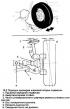
Checking the steering and suspension
1. Visually inspect the steering system for damage and wear. Look for leaks, damaged seals, tips, caps. 2. Wipe away any dirt from the bottom of the ball joint and...
1. Visually inspect the steering system for damage and wear. Look for leaks, damaged seals, tips, caps. 2. Wipe away any dirt from the bottom of the ball joint and...

Checking the brakes
Note: In addition to regular checks, the brake system should be inspected whenever a tire is changed or when it malfunctions. From a safety perspective, checking the...
Note: In addition to regular checks, the brake system should be inspected whenever a tire is changed or when it malfunctions. From a safety perspective, checking the...

Automatic transmission control rod lubrication
1. Open the hood and locate the shift cable running behind the transmission on the left side. 2. Clean the contact points and turning areas at the upper end of the...
1. Open the hood and locate the shift cable running behind the transmission on the left side. 2. Clean the contact points and turning areas at the upper end of the...

Checking the oil level in a manual transmission
Note: The level and quality of the oil in the manual transmission should not decrease under normal vehicle operation. However, we recommend checking it from time to...
Note: The level and quality of the oil in the manual transmission should not decrease under normal vehicle operation. However, we recommend checking it from time to...

Checking and disassembling the rear wheel bearing (up to 1989)
Warning: As a result of brake lining wear, dust is formed that settles on brake system components. It contains asbestos and is harmful to health. Do not blow it off with...
Warning: As a result of brake lining wear, dust is formed that settles on brake system components. It contains asbestos and is harmful to health. Do not blow it off with...
Replacing spark plugs
Warning: In these models of vehicles, the electric fan can operate with the ignition off. When working in the fan area, turn off its motor or disconnect the negative...
Warning: In these models of vehicles, the electric fan can operate with the ignition off. When working in the fan area, turn off its motor or disconnect the negative...

Checking and replacing spark plug wires
Warning: In these models of vehicles, the electric fan can operate with the ignition off. When working in the fan area, turn off its motor or disconnect the negative...
Warning: In these models of vehicles, the electric fan can operate with the ignition off. When working in the fan area, turn off its motor or disconnect the negative...

Maintenance of the cooling system (draining, flushing, filling)
Warning: Antifreeze is a corrosive and poisonous liquid, so be careful not to let it drip onto painted surfaces of your car or onto your skin. If this happens, rinse the...
Warning: Antifreeze is a corrosive and poisonous liquid, so be careful not to let it drip onto painted surfaces of your car or onto your skin. If this happens, rinse the...

Automatic transmission fluid and filter replacement
Note: The procedure for periodic replacement of fluid and filters is not regulated by the manufacturer. However, if you constantly drive the car or operate it in...
Note: The procedure for periodic replacement of fluid and filters is not regulated by the manufacturer. However, if you constantly drive the car or operate it in...
This section is available on russian, bulgarian, belarusian, ukrainian, serbian, croatian, romanian, polish, slovak, hungarian
See other similar sections for Ford cars:
• General information: Maintenance Ford Focus 2 (2004-2010)
• General information: Maintenance and care Ford Mondeo 2 (1997-2000)
• General information: Maintenance Ford Escort 5 (1990-1997)
• General information: Maintenance Ford Fiesta 2 (1983-1989)
• General information: Maintenance Ford Focus 2 (2004-2010)
• General information: Maintenance and care Ford Mondeo 2 (1997-2000)
• General information: Maintenance Ford Escort 5 (1990-1997)
• General information: Maintenance Ford Fiesta 2 (1983-1989)
Taurus 1 and 2
- General information
- Characteristics
- Maintenance
- Troubleshooting
- Engine
- Four-cylinder engine
- Six-cylinder engine
- Overhaul
- Cooling system
- Fuel/exhaust systems
- Engine electrics
- Emission control
- Transmission
- Mechanical gearbox
- Automatic gearbox
- Clutch and drives
- Chassis
- Brake system
- Car suspension
- Steering
- Body
- Repair and maintenance
- Electrical equipment