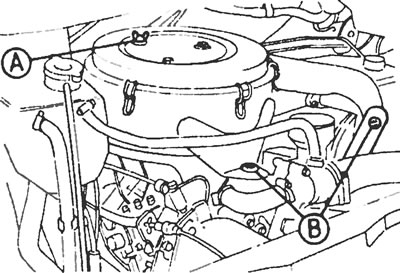
Figure 36.1a. Round air cleaner fitted to some engines with normal air supply: A Central fixing bolt, B Support bracket mounting bolts.
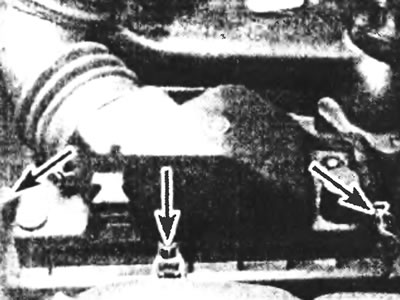
Figure 36.1b. If the filter is installed on the side, release the latches...
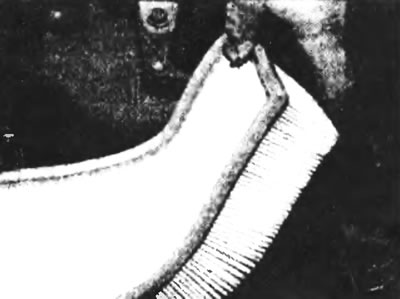
Figure 36.1c...and pull out the filter element.
2. At the established intervals, the element must be replaced regardless of its condition.
3. If you are checking the element for any other reason, inspect its bottom surface; if it is oily or very dirty, replace the element with a new one. If it is only lightly covered with dust, blow compressed air through the filter from top to bottom.
Warning: Wear safety glasses when using compressed air! Since the filter is made of paper, it cannot be washed or degreased. If it cannot be cleaned with compressed air or a brush, do not clean it and replace the filter with a new one.
Warning: Never drive your vehicle with the filter element removed. This will result in excessive wear and engine contamination.
4. Installation is carried out in the reverse order of removal. Fit both the element and its cover tightly so that unfiltered air cannot enter the engine.
Checking the air filter temperature control system
5. Some early type air filters have an inlet air temperature control system.
6. In this case, the air filter has two air sources: external - directly from the atmosphere, and internal - from under the exhaust manifold housing. When the ambient air temperature drops below a certain level, the flap valve closes and supplies warm air heated from under the exhaust manifold housing to the filter, and when the ambient air temperature returns to normal, the valve opens to admit cooler outside air.
7. The system should be checked with a cold engine. Disconnect the main air intake duct and ensure the hot air intake flap is closed (that is, open to the passage of cold air).
8. Start the engine and check that when the engine is cold (below 12°C) at idle, the hot air intake vent is open and warm air heated by the exhaust manifold enters the air filter. If everything is as described, then the damper is working correctly.
9. If the flap does not operate as described, check the condition of the vacuum line and its connections, and make sure that the flap valve is not sticking. If they are OK, then either the temperature sensor or the vacuum actuator is faulty and you will need to install a new air filter. Once completed, install the main duct.