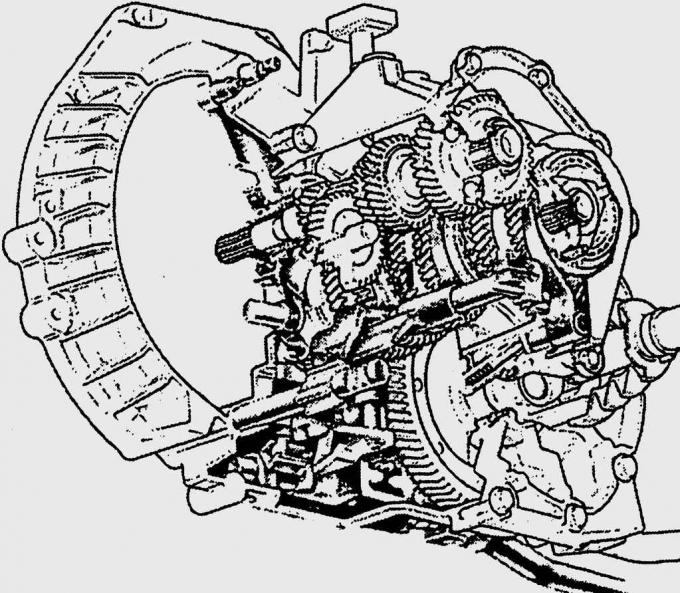
Fig. 12.3. Manual transmission (iB5), which is equipped with all models of cars since 1996
Fiesta cars are equipped with a five-speed gearbox (Fig. 12.3). All forward gears are fully synchronized, and the first three gears even have double synchronizers. Depending on the engine model, gearboxes with different gear ratios are installed. Only the automatic gearbox operates continuously, selecting the required gear ratios between two pairs of bevel gears of different diameters. As practice shows, Fiesta gearboxes are reliable in operation and rarely fail. If you encounter an exception to the rule, entrust the repair of the gearbox to an auto repair shop or service center. You can perform the repair yourself only if you have the necessary tools and certain knowledge and experience. Even auto repair shops hand over gearboxes that require major repairs to their manufacturer or replace the gearbox with another one.

TECHNICAL DICTIONARY
Gearbox operation
Torque from the engine crankshaft is transmitted through the clutch to the primary shaft of the gearbox. The primary shaft has five helical gears and a reverse gear, which are in constant engagement with the gears on the secondary shaft. The gears on the secondary shaft are mounted on needle bearings and rotate freely on the shaft until a certain gear is engaged in the gear shift mechanism.
Gears and shafts
When a gear is engaged, the corresponding pinion is locked with the secondary shaft of the gearbox. The ratio of the number of teeth of the engaged pair of pinions ultimately provides the corresponding gear. When shifting gears, no connection is made between the pinions - the connection is made between the pinion and the shaft. The gearshift lever acts on the fork, which, through the clutch, provides a rigid kinematic connection of the pinions. To equalize the rotational speeds of the shaft and pinion, synchronizers consisting of several elements are used. The faster rotating shaft is slowed down by friction until a connection with the transmission of torque is made at a uniform rotational speed. Since it takes a short time to synchronize the rotational speeds, it is not recommended to press hard on the gearshift lever, especially with a cold engine and thick transmission oil.
Forward and reverse gears
The Fiesta's first three gears rotate at a speed lower than the engine crankshaft. In fourth gear, the ratio is 0.95:1, and the driven gears rotate at a higher speed than the engine crankshaft. Experts talk about a "long" gear, which maintains the optimum power characteristics of Ford engines. In fifth gear (gear ratio 0.76:1), the "scissors" - the difference in engine and drive speeds - are even greater, which preserves the engine and reduces fuel consumption, especially over long distances. When shifting all forward gears, two gears are used. Only three gears are used for reverse gear. The third gear, also called the intermediate gear, is located on a separate shaft and is only engaged when it is necessary to change the direction of rotation of the drive shaft to ensure reverse gear.
The material was copied from an information website FORDBOOK.ru