Car engine cooling system Ford Fiesta 4

General information about the cooling system
Fig. 6.1. Engine cooling system diagram: 1 – expansion tank; 2 – heater radiator; 3 – radiator fan; 4 – thermostat; 5 – water pump; 6 – engine The car engine operates in...
Fig. 6.1. Engine cooling system diagram: 1 – expansion tank; 2 – heater radiator; 3 – radiator fan; 4 – thermostat; 5 – water pump; 6 – engine The car engine operates in...

Cooling liquid
In the cooling system, a mixture of antifreeze and anticorrosive agent with water provides the necessary cooling of the Fiesta engine. That is why they talk about...
In the cooling system, a mixture of antifreeze and anticorrosive agent with water provides the necessary cooling of the Fiesta engine. That is why they talk about...

Checking the tightness of the cooling system
20,000 km, 12 months SEQUENCE OF WORKS 1. Check the condition and reliability of the cooling system hoses on the radiator and engine, as well as the hoses going to the...
20,000 km, 12 months SEQUENCE OF WORKS 1. Check the condition and reliability of the cooling system hoses on the radiator and engine, as well as the hoses going to the...

Checking the level and adding coolant
constant control SEQUENCE OF WORKS 1. Periodically check the coolant level in the expansion tank on a cold engine, since there is no pressure in the cooling system and...
constant control SEQUENCE OF WORKS 1. Periodically check the coolant level in the expansion tank on a cold engine, since there is no pressure in the cooling system and...

Replacing the coolant
Ford does not recommend routine coolant replacement. If coolant needs to be replaced, follow these steps:. every 24 months SEQUENCE OF WORKS 1. To relieve pressure in...
Ford does not recommend routine coolant replacement. If coolant needs to be replaced, follow these steps:. every 24 months SEQUENCE OF WORKS 1. To relieve pressure in...

Protecting the Fiesta engine from frost down to -30°C
Fig. 6.5. Measuring the density of the coolant with a hydrometer with a float In mid-latitudes, the coolant protects the car engine from frost down to -30°C based on...
Fig. 6.5. Measuring the density of the coolant with a hydrometer with a float In mid-latitudes, the coolant protects the car engine from frost down to -30°C based on...

Removing and checking the thermostat
The thermostat is removed only when the engine is cold. Removing the thermostat is not particularly difficult, but if you are confident in your abilities, leave this...
The thermostat is removed only when the engine is cold. Removing the thermostat is not particularly difficult, but if you are confident in your abilities, leave this...
Radiator fan
A faulty radiator fan can cause the coolant to overheat, of course, only if the engine is idling for a long time, driving intermittently at the end of the work day or in...
A faulty radiator fan can cause the coolant to overheat, of course, only if the engine is idling for a long time, driving intermittently at the end of the work day or in...

Troubleshooting the Radiator Fan
SEQUENCE OF WORKS 1. First of all, check the condition of the fuses. 2. If the fuses are OK, disconnect the connector from the temperature sensor. Fig. 6.9. Using a...
SEQUENCE OF WORKS 1. First of all, check the condition of the fuses. 2. If the fuses are OK, disconnect the connector from the temperature sensor. Fig. 6.9. Using a...

Removing the radiator fan
SEQUENCE OF WORKS 1. Raise the front of the vehicle. Disconnect the negative battery cable (terminal "31") and the connector from the radiator fan motor. Remove the...
SEQUENCE OF WORKS 1. Raise the front of the vehicle. Disconnect the negative battery cable (terminal "31") and the connector from the radiator fan motor. Remove the...

Removing the radiator
SEQUENCE OF WORKS 1. Raise the front of the vehicle. Disconnect the negative battery cable (terminal "31") and the connector from the radiator fan motor. Remove the...
SEQUENCE OF WORKS 1. Raise the front of the vehicle. Disconnect the negative battery cable (terminal "31") and the connector from the radiator fan motor. Remove the...
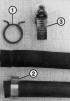
Replacing cooling system hoses
If a crack appears on a coolant hose in your Fiesta while driving, temporarily wrap the damaged area with adhesive tape. To be on the safe side, unscrew the expansion...
If a crack appears on a coolant hose in your Fiesta while driving, temporarily wrap the damaged area with adhesive tape. To be on the safe side, unscrew the expansion...

Possible malfunctions of the cooling system
Possible malfunctions of the cooling system, their causes and methods of elimination
Possible malfunctions of the cooling system, their causes and methods of elimination

This section is available on russian, bulgarian, belarusian, ukrainian, serbian, croatian, romanian, polish, slovak, hungarian
See other similar sections for Ford cars:
• Power unit: Cooling system Ford Focus Turnier 1 (1998-2004)
• Power unit: Cooling system Ford Mondeo 4 (2007-2014)
• Engine: Cooling and heating Ford Escort 5 (1990-1997)
• Engine: Cooling system Ford Taurus 1 and 2 (1986-1994)
• Power unit: Lubrication and cooling system Ford Fusion (2002-2012)
• Power unit: Cooling and heating Ford Transit 2 (1986-2000, diesel)
• Power unit: Cooling system Ford Focus Turnier 1 (1998-2004)
• Power unit: Cooling system Ford Mondeo 4 (2007-2014)
• Engine: Cooling and heating Ford Escort 5 (1990-1997)
• Engine: Cooling system Ford Taurus 1 and 2 (1986-1994)
• Power unit: Lubrication and cooling system Ford Fusion (2002-2012)
• Power unit: Cooling and heating Ford Transit 2 (1986-2000, diesel)
Fiesta 4
Fiesta 2
- General information
- Characteristics
- Working conditions and tools
- Car care
- Power unit
- Engine repair
- Lubrication system
- Cooling system
- Air filter
- Fuel injection system
- Ignition system
- Supply system
- Exhaust system
- Transmission
- Chassis
- Car suspension
- Steering
- Wheels and tires
- Brake system
- Body
- Interior
- Exterior
- Electrical equipment
- Light and appliances
- Battery and alternator
Fiesta 2
- General information
- Characteristics
- Maintenance
- Engine
- Disassembly and assembly
- Block head
- Connecting rod and piston group
- Lubrication system
- Gas distribution system
- Cooling system
- Supply system
- Diesel power system
- Ignition system
- Transmission
- Clutch
- Mechanical gearbox
- Automatic gearbox
- Drive shafts
- Suspension and chassis
- Front suspension
- Rear suspension
- Steering
- Brake system
- Electrical equipment
- Equipment and devices
- Electrical equipment diagrams