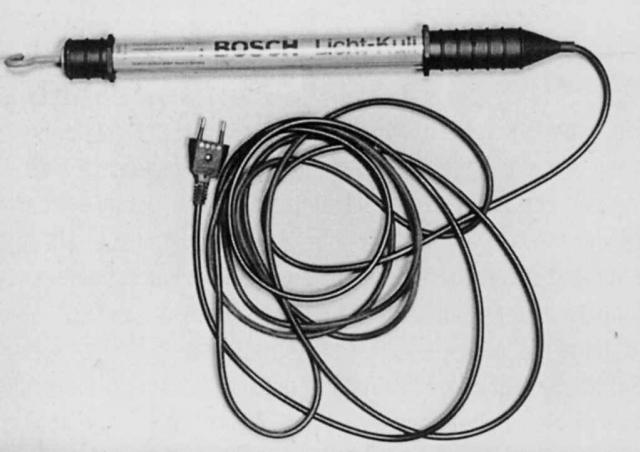
Fig. 2.12. A portable hanging lamp used when working in poorly lit areas
The hanging portable lamp (Fig. 2.12) is of great help when working under the car or in the engine compartment, as well as when working in the passenger compartment and, as often happens, in a poorly lit garage.
The advantages of such a lamp include its anti-glare protection, oil-resistant connecting wire. The lamp shade is covered with a synthetic shockproof material. In addition, the lamp is waterproof.
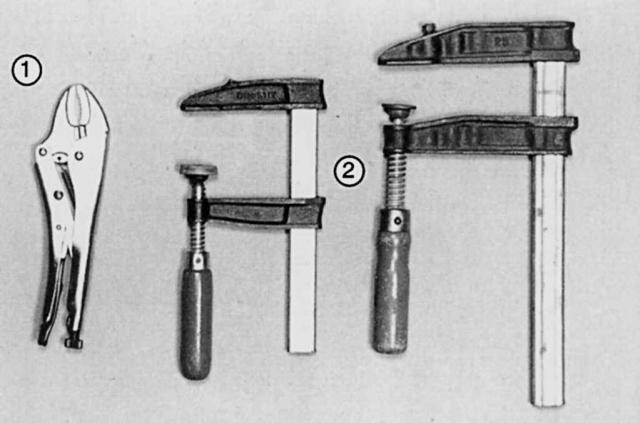
Fig. 2.13. Adjustable collet wrench (1) and clamps (2), replacing the "third" hand in a number of jobs
An adjustable collet wrench 1 (Fig. 2.13), with which you can set the required nut size for unscrewing, and clamps of 2 different sizes will help you in a number of jobs, for example, when fixing large parts or when there is no "third" hand.
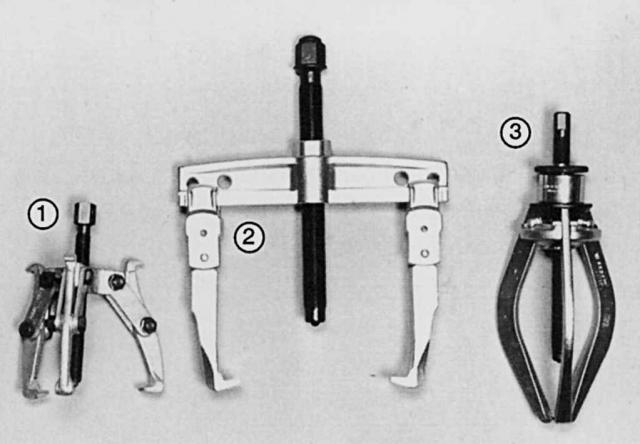
Fig. 2.14. A small set of pullers: 1 – puller with three jaws; 2 – puller with two jaws (common design); 3 – internal puller
A small set of pullers, consisting of a three-lever puller 1 (Fig. 2.14), a two-lever puller 2 (the most commonly used) and an internal puller 3. Pullers are a must-have accessory for any auto repair shop. It is advisable to have this tool in your garage, for example, if you want to remove a wheel hub or axle bearing.
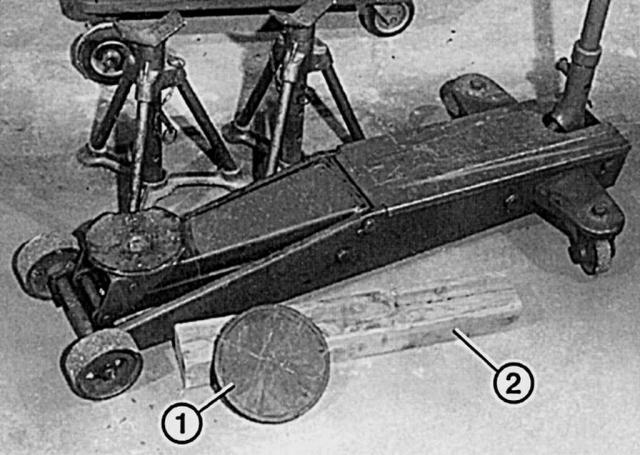
Fig. 2.15. A universal jack, which is a good alternative to a car jack: 1 – rubber gasket; 2 – Hardwood block for weight distribution
A universal jack is better suited for repairs than the jack supplied with the car. The ideal design is one with a foot pedal for lifting. Make sure that the small wheel jack does not move under load. The most important parts for lifting the car are the hard rubber pad 1 (Fig. 2.15), which protects the underbody of the car from damage, and the hardwood block to distribute the weight. The support legs shown in the background prevent the car from falling, and the wedges are placed under the wheels of the car to secure it.
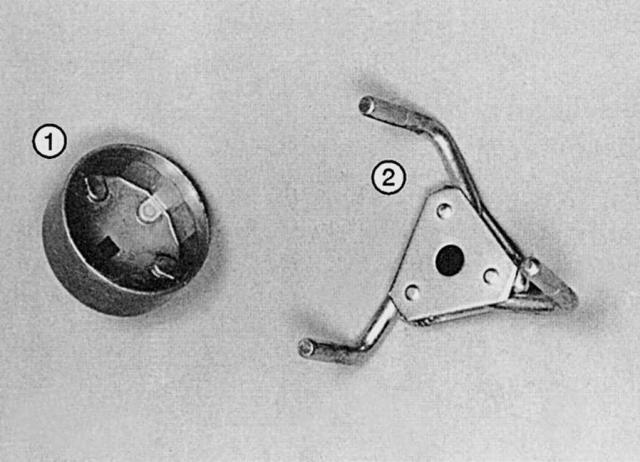
Fig. 2.16. Special key (1) and universal key (2) for replacing the oil filter
Special key 1 (Fig. 2.16) and universal key 2 for replacing the oil filter.
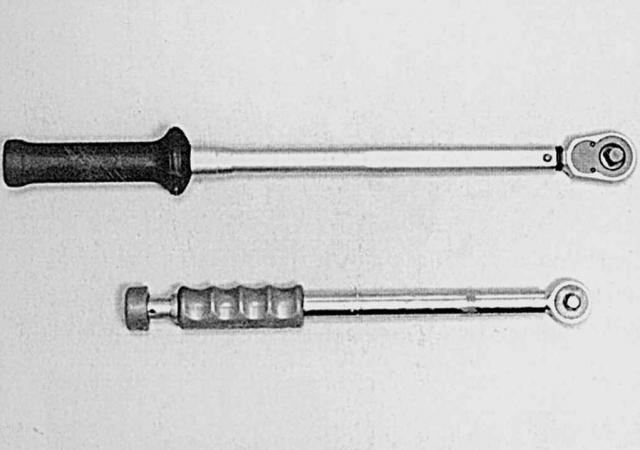
Fig. 2.17. Torque wrenches
Torque wrenches (Fig. 2.17) that automatically begin to slip when the specified tightening torque is exceeded.
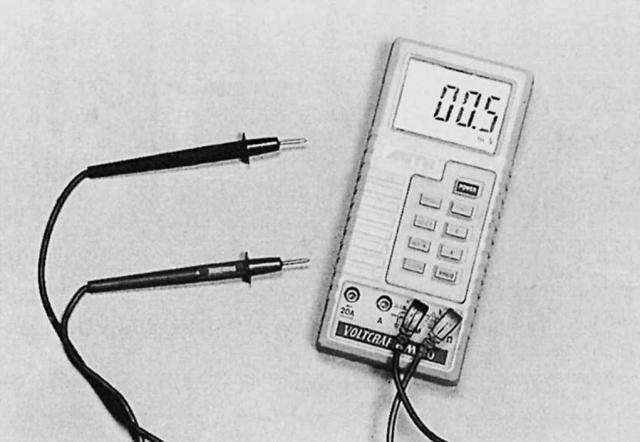
Fig. 2.18. Universal tester designed for precise measurement of control values of voltage, current or resistance in electrical circuits of a car
A universal tester (Fig. 2.18) designed for precise measurement of control values of voltage, current or resistance in the electrical circuits of a car. Experienced auto electricians do not work without it.
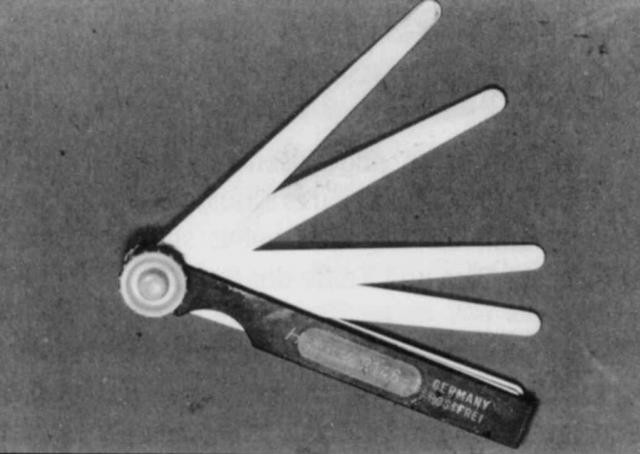
Fig. 2.19. Set of feeler gauges for measuring gaps
Set of feeler gauges (Fig. 2.19) for measuring clearances. Necessary for checking valve clearances or measuring the clearances of the ignition system speed sensor or ABS sensors. When purchasing, pay attention to the fact that the set contains feeler gauges of the thickness you need.
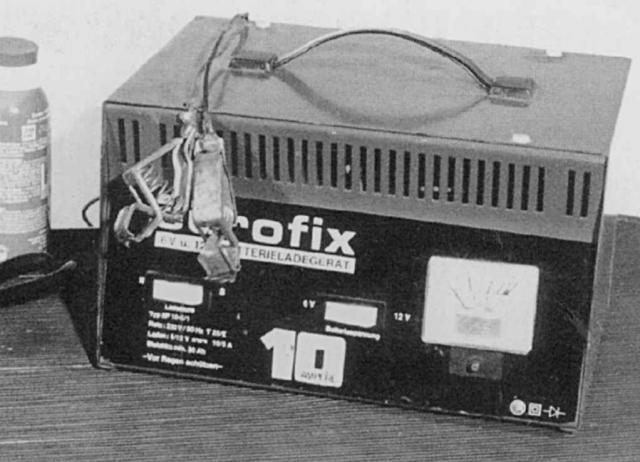
Fig. 2.20. Charger with automatic regulation of charging current
A charger (Fig. 2.20) with automatic regulation of the charging current is especially necessary in winter, when the car is used for short-distance trips and the heavily loaded battery does not receive sufficient recharging from the generator.
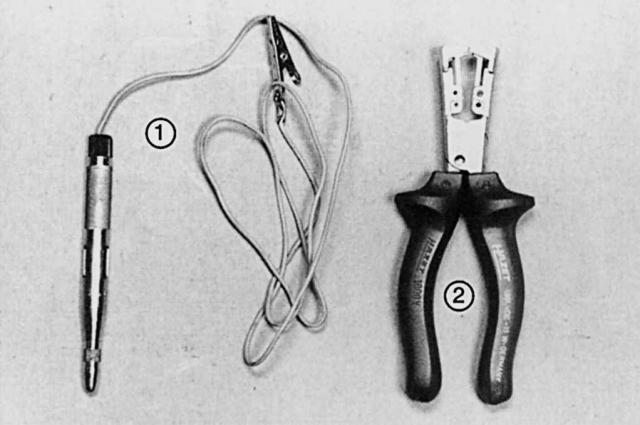
Fig. 2.21. Electrical tester (1) with an alligator clip and contact tip and pliers (2) with insulated handles, which can be used to remove insulation without damaging the wire
Electrical tester 1 (Fig. 2.21) with an alligator clip and contact tip and pliers 2 with insulated handles, with which you can remove the insulation of the wire without damaging it.